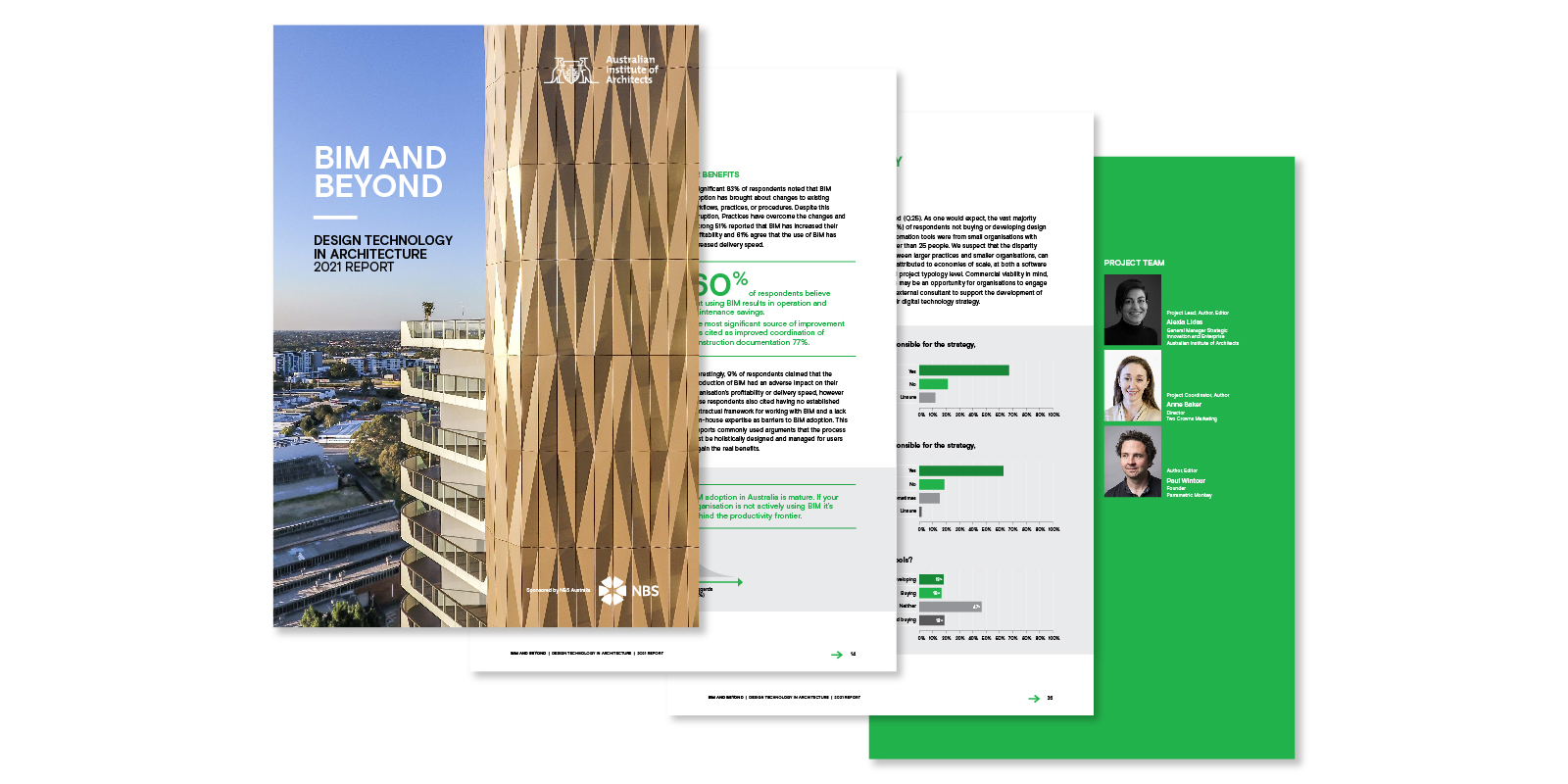

Co-authored by Parametric Monkey, ‘BIM and Beyond: Design Technology in Architecture’ is a report commissioned by the Australian Institute of Architects (AIA) to help examine the usage of design technology in Australian architecture practices. The report identified several key findings in how organisations are embracing digital technology:
- Design Technology has a seat at the decision-making table with representation in the leadership team of 64% of responding practices.
- Over half of responding practices are purchasing and developing design automation tools.
- BIM adoption in Australia is mature, and organisations not actively using BIM are behind the productivity frontier.
- 77% of respondents believe that BIM improves the coordination of construction documentation.
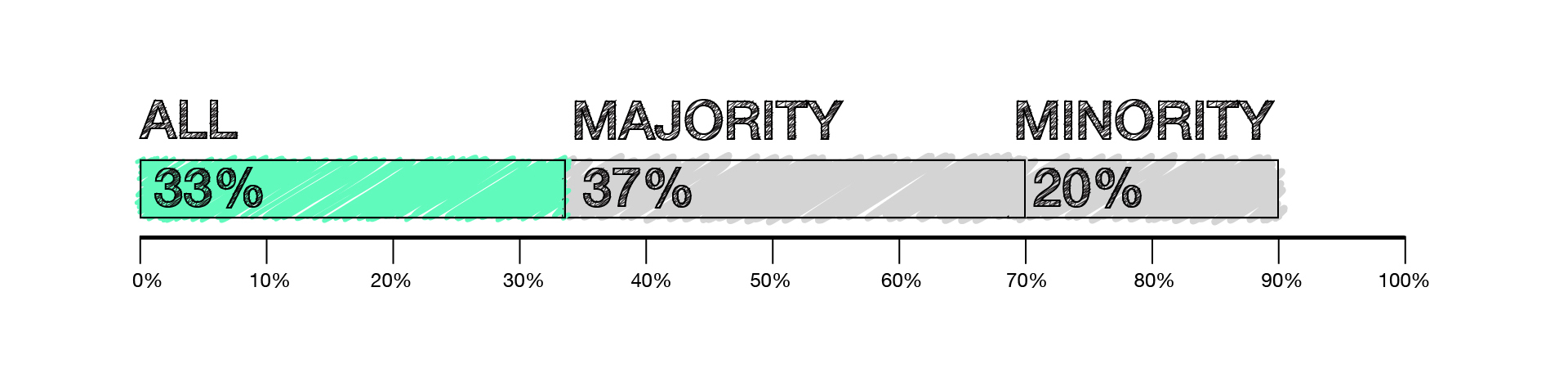
- 82% believe BIM will be used on the majority of projects in 5 years, with 55% of these respondents believing it will be used on all projects (in 5 years).
- 9% of respondents are currently selling services that use their AI capability. 30% of respondents have yet to sell services but are seeking fees in this area in the near or immediate future.
- Architectural firms should embrace the potential of emerging technologies by deeply entwining them into their business models.








2 Comments
Jean-Marc Couffin
Hey Paul,
How many respondents were they? It states that they represent 8000 employees. But the number of respondents feels important to ponder the result. The whole study seems to have touch people mostly involved with design technology by default.
Paul Wintour
Hi Jean-Marc
Interesting question. The actual survey was sent to 400+ people, as noted on page 7. The number of responses was far less. I don’t have the exact number off hand. From memory, there was only a single respondent from each firm. This was how the “representing 8,000 employees” number was derived.
To get an accurate snapshot of the industry is hard. For example, figures may be skewed by members choosing not to participate in the survey due to them not utilising BIM; hence, we might overestimate BIM adoption.
Also, regarding institute member distribution in Australia, 34% of architects are sole traders, and an astonishing 98.4% of architectural practices employ less than 20 people. Some people’s responses deserve to be weighted differently as they represent different-sized practices. Some results are presented more granularly based on practice size, but mostly, the results are aggregated.